Three Cheese Mini Quiche
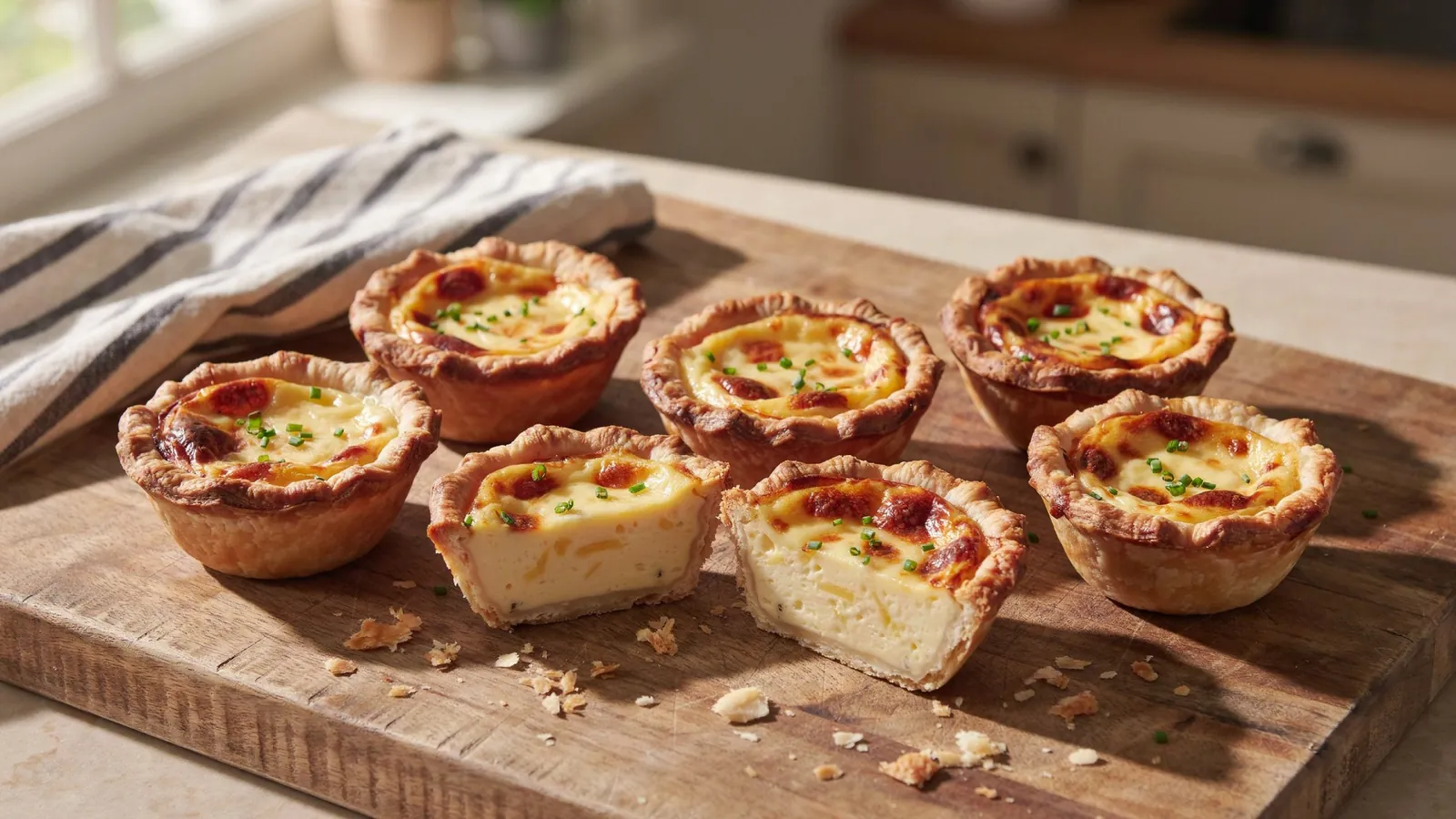
These are quiche-in-a-cup: a flaky pie-crust shell, a creamy custard and three cheeses that each do something different. Gruyère melts and adds a nutty depth, cheddar brings sharpness and Parmesan gives a savory edge. They reheat well, travel without a plate and freeze for weeks, which is why they suit breakfasts, brunches and lunchboxes equally.
Ingredients You’ll Need
- 2 refrigerated 9-inch pie crusts (one 14.1 oz box), at room temperature for 15 minutes
- 4 large eggs
- 1 cup (240 ml) half-and-half
- 1/2 tsp kosher salt
- 1/4 tsp ground black pepper
- Pinch of ground nutmeg
- 2 tbsp finely chopped fresh chives
- 1/2 cup (50 g) shredded Gruyère cheese
- 1/2 cup (50 g) shredded sharp cheddar cheese
- 1/4 cup (25 g) finely grated Parmesan cheese
- Nonstick cooking spray, for the pan
How to make three cheese mini quiche
- Step 1.
Heat the oven to 375°F (190°C) with a rack in the lower third. Spray a 12-cup standard muffin tin well, including the top surface around the cups.
- Step 2.
Unroll the pie crusts. Cut as many 4-inch circles as you can from each, using a cutter or a wide jar lid as a guide. Gather the scraps, press them together and re-roll once to cut the remaining circles, 12 in all.
- Step 3.
Press one circle into each cup, pushing it into the corners and letting a little of the edge stand above the rim. Prick the bottoms once or twice with a fork.
- Step 4.
Toss the Gruyère, cheddar and Parmesan together. Divide among the shells, about 1 1/2 tablespoons each.
- Step 5.
Whisk the eggs, half-and-half, salt, pepper, nutmeg and chives until fully combined. Pour into a liquid measuring cup or pitcher and fill each shell about 3/4 full, so the custard has room to puff.
- Step 6.
Bake for 22 to 26 minutes, until the custard is puffed and golden, the edges of the crust are deep golden and the center of a quiche does not jiggle when the pan is nudged. An instant-read thermometer inserted into the center should read 160°F (71°C).
- Step 7.
Let the quiches rest in the pan for 5 minutes, which lets the custard settle and the crust firm up. Run a thin knife around each, lift out and serve warm or at room temperature.
The custard ratio behind a tender quiche
Classic quiche custard uses about one large egg for every 1/2 cup of dairy. That ratio sets firmly enough to hold a cheese filling but stays creamy rather than rubbery. This recipe uses four eggs and a cup of half-and-half for twelve cups, and the cheese adds structure of its own. Half-and-half gives a lighter result than heavy cream and a more luscious one than milk. Whole milk works if that is what you have, though the quiches will be slightly less rich and a bit more likely to weep as they cool.
Why the cheeses are split three ways
Gruyère is the one to keep if you can only find one: it melts evenly and has a nutty, slightly sweet flavor that makes custard taste more complex. Sharp cheddar supplies the tang. Parmesan is finely grated and used sparingly because it is salty and tends to dry out when used in a larger amount. Shredding the cheese yourself helps; pre-shredded cheese is coated with starch to prevent clumping, which keeps it from melting as smoothly into the custard.
Make party food easier.
Get practical recipes, useful swaps and seasonal ideas delivered to your inbox.
Keeping the bottoms from going soggy
A wet filling in an unbaked crust is the usual reason quiche bottoms turn pale and soft. Three small things help here. Bake on a lower rack so the base gets direct heat. Spray the pan generously and press the dough against the metal, so the crust bakes against a hot surface. And put the cheese in first, so a layer of fat sits between the custard and the dough. Prick the bottoms lightly with a fork so steam can escape rather than puffing the base up.
Because these are small, they do not need blind baking. Larger quiches do.
Filling and baking
Fill the shells only about 3/4 full. Custard puffs as it bakes, and a full cup spills over the rim and glues the quiche to the pan. Take them out when the centers are set and puffed; they will settle as they cool. If they start to look dry or brown at the edges before the middle is set, the oven is probably too hot. An oven thermometer is a quick way to check.
The nutmeg is a very small amount, a pinch, and is not meant to be tasted on its own. It is a traditional note in cheese custards that rounds out the dairy.
Customizing the filling
Cooked add-ins should be dry and finely chopped: crumbled bacon, sautéed mushrooms, thawed and squeezed spinach, or finely diced ham. Use about 1/4 cup total across the batch and add them on top of the cheese. Raw vegetables and wet fillings release water as they cook and make the quiche weepy, so cook them first and blot dry.
Make ahead, freeze and reheat
Quiches keep, refrigerated in an airtight container, for up to 4 days. To freeze, cool them completely, then freeze on a tray until firm and transfer to a freezer bag for up to 2 months. Reheat thawed quiches at 350°F for 8 to 10 minutes, or frozen ones for 15 to 18 minutes, until hot in the center. An oven or toaster oven gives a better crust than a microwave. Because eggs are the main ingredient, do not leave the quiches out at room temperature for longer than 2 hours.
For lunchboxes, serve them cold or room temperature; they are just as good that way.
Three Cheese Mini Quiche
Muffin-tin quiches with a flaky pie crust shell, creamy egg custard and a blend of Gruyère, cheddar and Parmesan.
Ingredients
- 2 refrigerated 9-inch pie crusts (one 14.1 oz box), at room temperature for 15 minutes
- 4 large eggs
- 1 cup (240 ml) half-and-half
- 1/2 tsp kosher salt
- 1/4 tsp ground black pepper
- Pinch of ground nutmeg
- 2 tbsp finely chopped fresh chives
- 1/2 cup (50 g) shredded Gruyère cheese
- 1/2 cup (50 g) shredded sharp cheddar cheese
- 1/4 cup (25 g) finely grated Parmesan cheese
- Nonstick cooking spray, for the pan
Instructions
- Heat the oven to 375°F (190°C) with a rack in the lower third. Spray a 12-cup standard muffin tin well, including the top surface around the cups.
- Unroll the pie crusts. Cut as many 4-inch circles as you can from each, using a cutter or a wide jar lid as a guide. Gather the scraps, press them together and re-roll once to cut the remaining circles, 12 in all.
- Press one circle into each cup, pushing it into the corners and letting a little of the edge stand above the rim. Prick the bottoms once or twice with a fork.
- Toss the Gruyère, cheddar and Parmesan together. Divide among the shells, about 1 1/2 tablespoons each.
- Whisk the eggs, half-and-half, salt, pepper, nutmeg and chives until fully combined. Pour into a liquid measuring cup or pitcher and fill each shell about 3/4 full, so the custard has room to puff.
- Bake for 22 to 26 minutes, until the custard is puffed and golden, the edges of the crust are deep golden and the center of a quiche does not jiggle when the pan is nudged. An instant-read thermometer inserted into the center should read 160°F (71°C).
- Let the quiches rest in the pan for 5 minutes, which lets the custard settle and the crust firm up. Run a thin knife around each, lift out and serve warm or at room temperature.
Put the cheese into the shells first and pour the custard on top. Cheese on the bottom shields the crust from moisture, and the custard around it sets into a creamy, evenly flavored filling.
NoshParty recipes are carefully researched for clarity, practicality and real-kitchen use.
Never wonder what to bring again.
Get practical party recipes, seasonal ideas and crowd favorites delivered straight to your inbox.